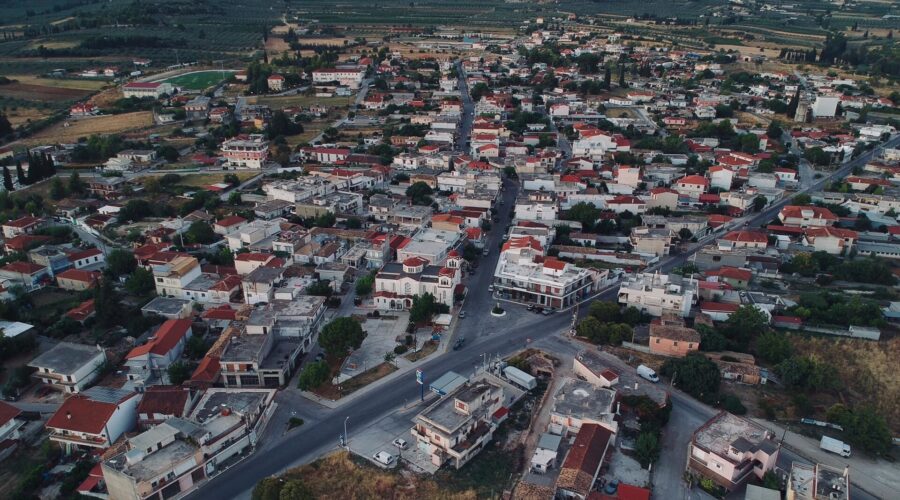
Ancient Tenea: The Secret of the Lost City in Chiliomodi
Article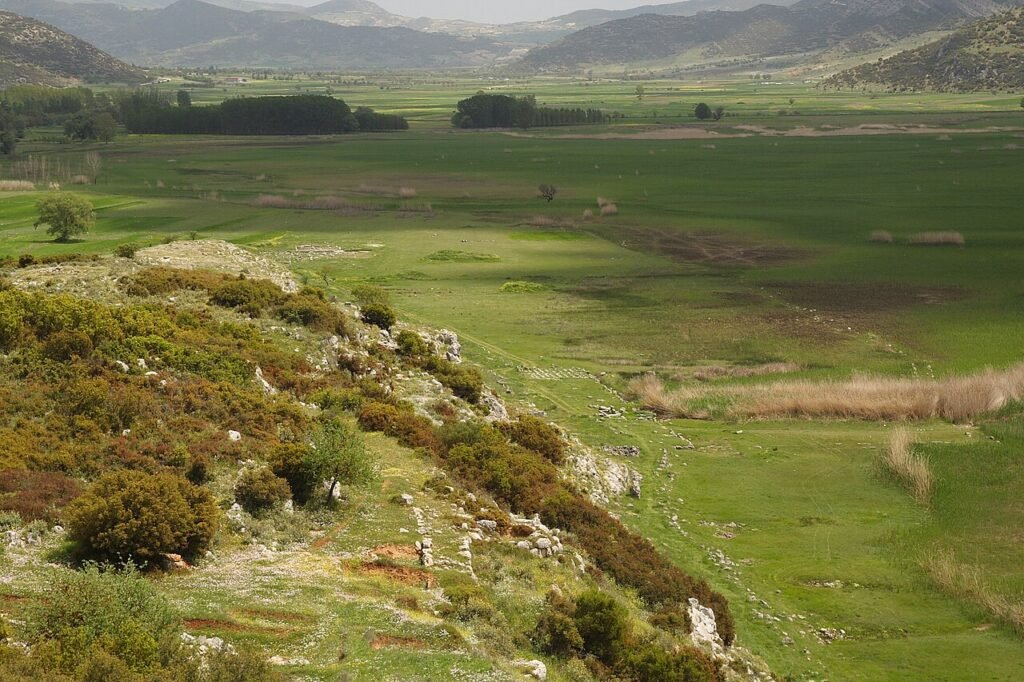
In the heart of the Corinthian land, where the rolling hills of Chiliomodi meet the ancient pathways leading toward Argos, one of Greece’s most fascinating archaeological puzzles remained hidden for centuries. Ancient Tenea, the “lost city” known through historical texts but long elusive to modern researchers, is finally emerging from the earth. For the contemporary traveller, Tenea is not just a static monument; it is a living excavation that is actively redrawing the archaeological map of the Peloponnese. Its story is a blend of Homeric legends, Roman diplomacy, and extraordinary wealth.
The Myth and Founding: From Tenedos to Corinthia
The origins of Tenea are inextricably linked to the aftermath of the Trojan War. According to ancient tradition, King Agamemnon of Mycenae permitted a group of captives from the island of Tenedos to establish their own settlement in the Corinthian hinterland. Out of respect for their homeland, they named the new city Tenea. The choice of location was strategic, situated approximately 15 kilometres south of Corinth, allowing the inhabitants to control the vital mountain passes and trade routes connecting the Saronic Gulf with the Argive plain.
One of the most compelling legends surrounding the city involves the tragic figure of Oedipus. Local lore suggests that the mythical King of Thebes was raised in Tenea as the foster son of King Polybus. This connection imbues the site with a unique aura of ancient drama, positioning Tenea as a place where the boundaries between epic poetry and historical reality blur. As you walk through the modern excavation site, it is easy to imagine the city as a sanctuary for those seeking a new beginning after the fall of Troy.
The Prosperity of Tenea: A City That Defied History
Unlike many of its neighbours, Tenea was renowned in antiquity for its remarkable economic stability and its ability to navigate political turmoil. A famous ancient saying described the city’s ideal state: it was neither so large that it bore the heavy administrative burdens of a metropolis, nor so small that it failed to be reckoned with. This balance allowed the Teneans to focus on trade and agriculture, particularly the cultivation of vines and olives that still dominate the landscape today.
Perhaps the most significant chapter in Tenea’s history occurred in 146 BC. While the Roman General Mummius famously razed Corinth to the ground, Tenea was spared. Historical accounts suggest the Teneans had cultivated a favorable relationship with the Romans, perhaps due to their shared Trojan ancestry—a connection the Romans held in high regard. Consequently, while Corinth lay in ruins, Tenea flourished as a regional centre, eventually evolving into a luxurious city during the Roman imperial period.
Recent excavations have confirmed this narrative of wealth. Archaeologists have uncovered several key structures that highlight the city’s status:
- Grand Roman Baths: Spanning over 500 square metres, these baths feature sophisticated hypocaust heating systems and intricate water management networks.
- Luxury Villas: Residential complexes with beautiful mosaic floors and private courtyards that reflect the high standard of living enjoyed by the Tenean elite.
- Organised Urban Grid: A network of well-paved streets and public spaces that indicate a high level of civic planning.
- Commercial Hubs: Shops and production areas that prove the city was a bustling centre of commerce and artisanal craft.
The Kouros of Tenea: An Archaic Masterpiece
While systematic excavations only gained momentum in recent years, Tenea had already offered a glimpse of its artistic glory in the 19th century. In 1846, the “Kouros of Tenea” was discovered in a local cemetery. This exquisite statue, dating back to 560-550 BC, is considered one of the finest examples of Archaic sculpture in existence. Although it currently resides in the Glyptothek in Munich, its discovery served as the first major clue to the city’s hidden location. Today, the ongoing excavations at the Tenea necropolis continue to yield breathtaking grave goods, including golden jewellery and rare ceramics, which further illuminate the city’s artistic heritage.
Chiliomodi: The Gateway to the Excavation
The modern town of Chiliomodi serves as the primary base for exploring Ancient Tenea. This hospitable agricultural community maintains an authentic Peloponnesian character, far removed from the more commercialized coastal resorts. Chiliomodi is famous for its high-quality honey and agricultural produce, and a stop at the local central square is essential for any visitor.
Nearby Highlights and Cultural Sites
- The Roman Mausoleum: Located just over 200 metres from the main excavation site, this impressive structure stands as a testament to the city’s funerary architecture and the Roman influence on local customs.
- The Old Monastery of Faneromeni: A 13th-century Byzantine gem nestled in the hills. The monastery is a place of profound serenity and architectural beauty, offering panoramic views of the surrounding valleys.
- Klenia Village: Located just 1.5 kilometers from the site, Klenia is a quiet rural settlement surrounded by olive groves. It is also home to a local cave, which adds a touch of natural exploration to your historical itinerary. Details here: https://visitcorinthia.com/perioxi/klenia/
Practical Information for Travellers
Visiting Ancient Tenea is a unique experience because it is an active excavation. Unlike more established sites like Epidaurus, Tenea offers the thrill of seeing history being unearthed in real-time. This means that access to certain areas may vary depending on the time of year and the progress of the archaeological team.
Getting There
Chiliomodi is located approximately 15 kilometres (a 20-minute drive) south of Corinth. If you are travelling from Athens, follow the National Road toward Tripoli and take the exit for Argos/Nafplio. The route takes you through the beautiful Corinthian countryside, characterized by sprawling vineyards and ancient olive trees. The archaeological site is located within a few minutes’ drive from the centre of Chiliomodi.
Best Time to Visit
Spring (April to June) and Autumn (September to October) are the ideal seasons. The weather is mild, making it perfect for walking through the open excavation fields. In the spring, the area is covered in wildflowers, creating a stunning contrast with the ancient stones. During the summer months, it is advisable to visit early in the morning to avoid the midday sun, as the site offers limited shade. Always check locally or via official channels to see if the site is open for visitors during your specific dates.
Local Tips for a Better Experience
- Respect the Site: Since this is a “live” excavation, be careful not to disturb any cordoned-off areas or move any stones. Wear sturdy, closed-toe
Planning your visit to Corinthia?
Visit Corinthia is the travel guide for the region — hotels, tavernas, wineries and things to do, all in one place.
Related articles
Kechries and Loutra Oraias Elenis: swimming over an ancient harbourRead →Isthmia: the sanctuary of Poseidon, the Isthmian Games and the museumRead →Root: natural cosmetics from Riza, Corinthia, made with olive oil, honey and grapeRead →Not sure where to go next?Every village, sight and beach in Corinthia on one map — save the ones you like and open the route.
Open the mapRecommended in Corinthia
 Pleiadon Gi Mountain Resort & Spa
Hospitality · Trikala
Root nature cosmetics
Shopping · Riza
To polychoro taverna
Eat & Drink · Trikala
Pleiadon Gi Mountain Resort & Spa
Hospitality · Trikala
Root nature cosmetics
Shopping · Riza
To polychoro taverna
Eat & Drink · Trikala
 Kryoneri Cultural Association
Events · Kryoneri
Kryoneri Cultural Association
Events · Kryoneri
 Dimitra Stathi — Philologist
Services · Kiato
Dimitra Stathi — Philologist
Services · Kiato
 Corner grill & burger
Eat & Drink · Kiato
Corner grill & burger
Eat & Drink · Kiato
 Lia’s Travel
Services · Kiato
Blank Studio Photoshootings
Services · Kiato
Lia’s Travel
Services · Kiato
Blank Studio Photoshootings
Services · Kiato
Businesses that support Visit Corinthia.
Explore more of Corinthia
Plan your trip to Corinthia
Take the trip quizThings to do there — Corinthia
Optional tours, tickets and activities for your days here — you choose what suits you.
Activities & experiences — CorinthiaActivities, experiences and local guides — book ahead and skip the queues.
See options →Day trip — Ancient Corinth & NafplioA guided day with transport from Athens to Ancient Corinth and Nafplio, with free cancellation. Also: Corinth Canal & wine tasting, Ancient Corinth half-day
See options →Car rental — CorinthCompare prices from all the major rental companies, with free cancellation on most offers. Also: Loutraki, Nafplio, Argos
See options →Activities are provided and sold by our partners. You complete the booking on their own page, at exactly the same price.
Partner offer Before you arrive
Arrive in Corinthia already online
Maps, ferry times, a table for tonight — all of it needs data. MyEsim is a Greek eSIM app covering Greece and 180+ countries: install the plan before you fly, and it switches on the moment you land. No queue at the airport, no roaming bill. Visit Corinthia readers get 10% off.
- Covers all of Greece
- Ready in minutes
- No physical SIM
LIASTRAVELGet your eSIM →Enter the code at checkout on myesim.gr. Works on iPhone XS and newer and on most Android phones from 2019 onwards.