Heraion of Perachora & Lake Vouliagmeni: A Mythical Landscape
Article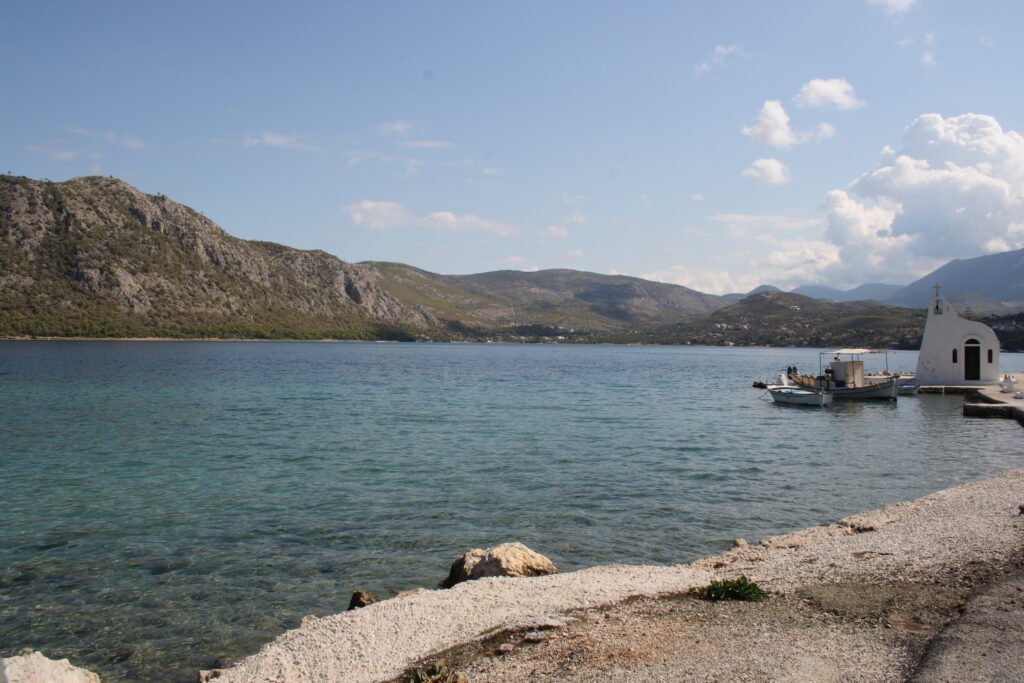
At the westernmost tip of the Perachora peninsula, where the deep blue waters of the Corinthian Gulf meet rugged cliffs and dense pine forests, lies one of Greece’s most enchanting landscapes. The Heraion of Perachora and the neighboring Lake Vouliagmeni form a destination that seems to have leaped from the pages of ancient mythology. Located just a breath away from the cosmopolitan town of Loutraki, this area offers a rare combination of archaeological significance, raw natural beauty, and absolute tranquillity. Whether you are a history buff, a nature enthusiast, or simply seeking a peaceful escape, this corner of Corinthia promises an unforgettable experience.
Lake Vouliagmeni: A Serene Lagoon Oasis
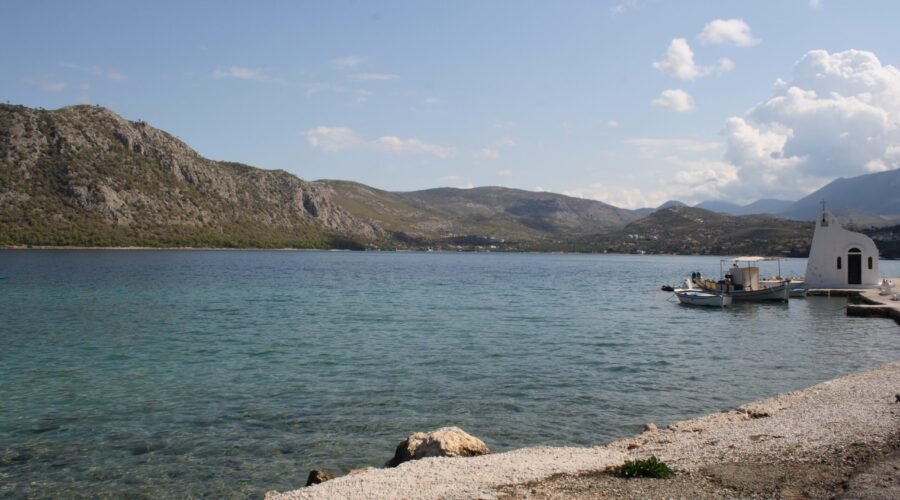
Before reaching the dramatic Heraion cape, visitors encounter Lake Vouliagmeni—which is actually a brackish lagoon rather than a freshwater lake. The scenery here is truly idyllic. The lake is cradled by the lush, pine-covered slopes of the Geraneia Mountains, creating a natural amphitheater of green and blue. It communicates with the Corinthian Gulf through a remarkably narrow channel, barely 6 metres wide, which was widened in the late 19th century to facilitate water exchange. This unique geography ensures the lake’s waters remain calm, warm, and crystal clear, making it a favourite swimming spot from early spring until late autumn.
The lake’s depth reaches about 40 metres, and its salinity changes depending on the tides and the inflow of seawater through the channel. Local legends often spoke of the lake being “bottomless,” a common myth for such geological formations, but today it is known as a safe, family-friendly haven. The perimeter of the lake is approximately 5 kilometres, making it an excellent circuit for those who enjoy a scenic morning run or a leisurely stroll under the shade of the trees.
Activities and Relaxation by the Water
Lake Vouliagmeni is far more than just a place for a quick dip. It has evolved into a hub for alternative tourism and relaxation. Visitors can enjoy a variety of activities that showcase the area’s natural charm:
- Water Sports: Due to the lack of strong currents and waves, the lake is an ideal playground for Stand-Up Paddling (SUP) and kayaking. It provides the perfect environment for beginners to find their balance and for families with children to explore the coastline safely.
- Cycling and Hiking: The paved road encircling the lake is perfect for a relaxed bike ride. For more adventurous hikers, several trails lead from the lake up into the Geraneia slopes, offering panoramic views of the entire peninsula.
- Gastronomy: Scattered around the lake’s shore are traditional tavernas and modern beach bars. Here, you can savor fresh fish caught in the gulf or traditional Corinthian appetizers while enjoying a view that resembles a living painting. Many of these establishments feature wooden platforms extending over the water, allowing you to dine just inches away from the gentle ripples.
The Heraion of Perachora: Where Antiquity Meets the Sea
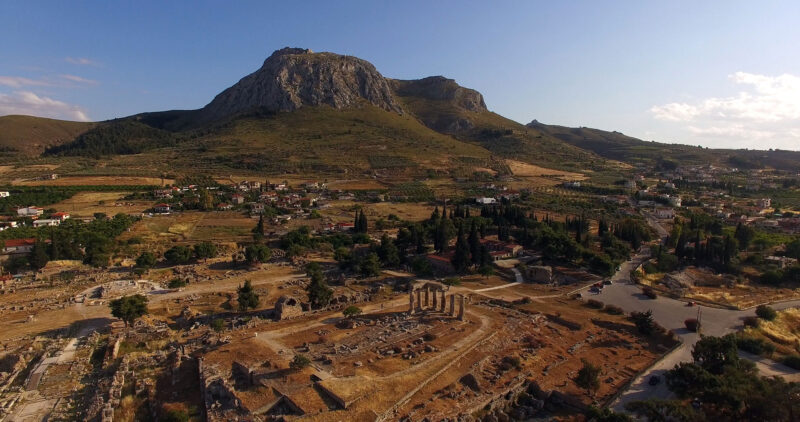
Continuing past the lake for about 2 kilometres, the road ends at the Heraion. This is arguably one of the most atmospheric archaeological sites in Corinthia, dedicated to the goddess Hera. What makes the Heraion unique is its location; the sanctuary is built directly on the water’s edge, nestled in a small cove protected by towering limestone rocks. The sight of ancient stones reflected in the turquoise sea is a rare architectural and natural harmony.
The sanctuary was an important religious centre for the ancient Corinthians, dating back to the 9th century BC. Excavations led by the British School at Athens in the 1930s revealed thousands of votive offerings, including exquisite pottery, bronze figurines, and jewellery, many of which are now housed in the National Archaeological Museum in Athens. The site served not only as a place of worship but also as a strategic harbour for ships navigating the Corinthian Gulf.
Key Monuments to Explore
The archaeological site is divided into two main sectors: the Sanctuary of Hera Akraia (Hera of the Promontory) and the Sanctuary of Hera Limenia (Hera of the Harbour). During your walk through the ruins, you will encounter:
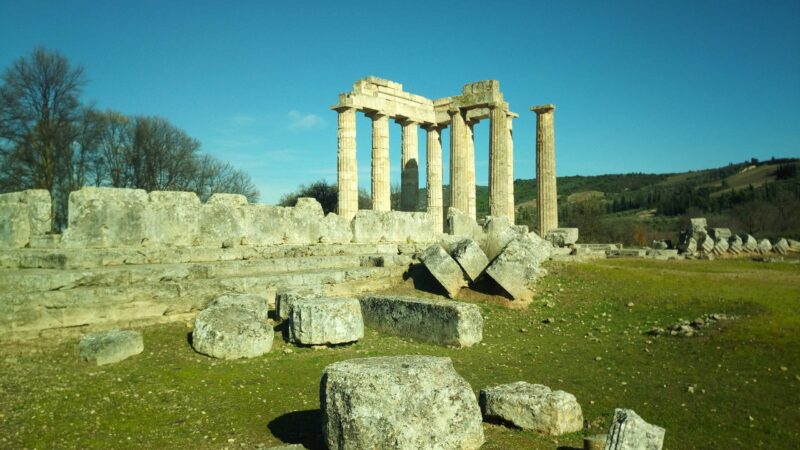
- The Temple of Hera Akraia: Dating to the 6th century BC, this Doric temple is located at the lowest level, right by the ancient harbour. Its foundations remain visible, offering a glimpse into the grandeur of the original structure.
- The L-Shaped Stoa: A two-story stoa that once served as a shelter and gathering place for pilgrims. Its design allowed visitors to enjoy the sea breeze while remaining protected from the sun.
- The Ancient Cisterns: An impressive example of ancient engineering. These deep, arched reservoirs were designed to collect rainwater, a vital resource for a sanctuary located on a rocky, dry peninsula.
- The Hearth: A ceremonial space used for cult meals, where remains of animal sacrifices and ritual vessels were discovered.
One of the most magical aspects of the Heraion is the freedom it offers. Unlike many fenced-off sites, visitors here can swim in the tiny cove adjacent to the ruins. Diving into the water while staring at 2,500-year-old columns is a surreal experience that connects you directly to the past.
Melagkavi Lighthouse: The Balcony of the Corinthian Gulf
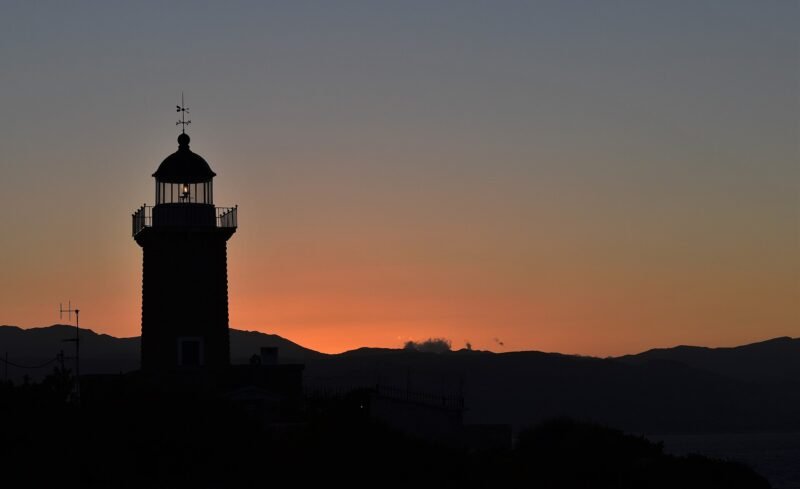
Perched directly above the archaeological site, on Cape Melagkavi, stands one of Greece’s most iconic stone lighthouses. The Melagkavi Lighthouse (also known as the Heraion Lighthouse) was built in 1897 and remains a landmark of the region. Its classic architecture, featuring a square tower made of local stone and white marble accents, blends harmoniously with the rugged, wind-swept landscape.
A short, rocky path leads from the Heraion parking area up to the lighthouse. From this vantage point, the view is breathtaking. You can look out across the vast expanse of the Corinthian Gulf, see the coastline of the Northern Peloponnese, and spot the Alkyonides Islands in the distance. This is the ultimate spot for sunset seekers. As the sun dips below the horizon, it paints the sky and the ancient marbles in shades of gold, orange, and purple—a spectacle that attracts photographers from all over the world.
Perachora Village: The Gateway to the Myth
Your journey shouldn’t end at the coast. A stop at the village of Perachora, which gives its name to the entire peninsula, is essential. Built at a higher altitude, the village maintains its traditional character with narrow streets and stone houses. The central square is the heart of the community, where you can sit at a traditional “kafeneio” and enjoy a Greek coffee or sample local products like olive oil and honey. The villagers are known for their hospitality, often eager to share stories about the history of the land. For more information on the village: Heraion of Perachora & Lake Vouliagmeni guide.
Practical Information for Your Visit
To make the most of your trip to Heraion and Lake Vouliagmeni, keep the following tips in mind:
- How to Get There: The area is approximately 15-20 minutes by car from Loutraki. The drive is scenic, winding through pine forests with frequent glimpses of the sea. From Athens, the journey takes about 1 hour and 15 minutes.
- What to Bring: If you plan to swim at the Heraion, bring water and snacks, as there are no shops within the archaeological site. Sturdy shoes or sneakers are highly recommended if you plan to walk up to the Melagkavi Lighthouse, as the terrain is rocky.
- Best Time to Visit: Spring and early autumn offer the most pleasant weather and fewer crowds. During the summer, Lake Vouliagmeni is very popular, especially on weekends, so arriving early is a good idea. The “golden hour” just before sunset is the best time for photography.
- Accessibility: The site is generally accessible, but the path to the lighthouse and some parts of the ruins involve uneven ground. Entry to the archaeological site is currently free of charge.
Why Visit This Region?
The Heraion of Perachora and Lake Vouliagmeni are more than just a quick excursion. They represent a place where time seems to slow down. The energy of the ancient sanctuary, the stillness of the lagoon, and the wild beauty of the cape create a sensory experience that lingers long after you leave. It is a powerful reminder of Corinthia’s rich heritage and its unparalleled natural diversity. Whether you’re here for the history or the horizon, this mythical corner of Greece will reward you with memories to last a lifetime.
Find out more here: Detailed Guide to Lake Vouliagmeni and explore the sights: Melagkavi Lighthouse information.
Planning your visit to Corinthia?
Visit Corinthia is the travel guide for the region — hotels, tavernas, wineries and things to do, all in one place.
The Peninsula Drive
The road to the Heraion from Loutraki climbs steeply into the mountains behind the city before descending to the coastal side of the peninsula. This 15-km drive is genuinely spectacular — views over Loutraki and the Gulf of Corinth, then around the headland to the Gulf of Nafplion, then down to the narrow road along the peninsula’s southern shore. Take it slowly in both directions. The road is passable in a regular car but narrow in places, especially the final kilometre to the harbour car park.
Related articles
Not sure where to go next?Every village, sight and beach in Corinthia on one map — save the ones you like and open the route.
Open the mapRecommended in Corinthia
 Dimitra Stathi — Philologist
Services · Kiato
Dimitra Stathi — Philologist
Services · Kiato
 Corner grill & burger
Eat & Drink · Kiato
Corner grill & burger
Eat & Drink · Kiato
 Lia’s Travel
Services · Kiato
Lia’s Travel
Services · Kiato
 Pleiadon Gi Mountain Resort & Spa
Hospitality · Trikala
Pleiadon Gi Mountain Resort & Spa
Hospitality · Trikala
 Blank Studio Photoshootings
Services · Kiato
Blank Studio Photoshootings
Services · Kiato
 Root nature cosmetics
Shopping · Riza
Root nature cosmetics
Shopping · Riza
 To polychoro taverna
Eat & Drink · Trikala
To polychoro taverna
Eat & Drink · Trikala
 Kryoneri Cultural Association
Events · Kryoneri
Kryoneri Cultural Association
Events · Kryoneri
Businesses that support Visit Corinthia.
Explore more of Corinthia
Plan your trip to Corinthia
Take the trip quizBefore you arrive
Arrive in Corinthia already online
Maps, ferry times, a table for tonight — all of it needs data. MyEsim is a Greek eSIM app covering Greece and 180+ countries: install the plan before you fly, and it switches on the moment you land. No queue at the airport, no roaming bill. Visit Corinthia readers get 10% off.
- Covers all of Greece
- Ready in minutes
- No physical SIM
Enter the code at checkout on myesim.gr. Works on iPhone XS and newer and on most Android phones from 2019 onwards.