 visitcorinthia.com
Monasteries of Corinthia: A Spiritual Journey & Devotion
Corinthia is far more than a destination of ancient ruins and sun-drenched beaches; it is a sacred landscape where Orthodox tradition and deep spirituality have left an indelible mark. A pilgrimage through the monasteries of Corinthia offers a unique experience that blends religious devotion with an appreciation for natural beauty and the architectural heritage of the Byzantine and post-Byzantine eras. From the windswept peaks of the Geraneia Mountains to the rugged, cliffside enclaves of Feneos, these monasteries stand as timeless sentinels of faith and history.
Monastery of Saint Patapius: The Balcony of the Corinthian Gulf
Perched at an altitude of about 550 metres on the slopes of the Geraneia Mountains, just 8 kilometres north of Loutraki, the Monastery of Saint Patapius is perhaps the most iconic pilgrimage site in the region. The location offers a staggering panoramic view that embraces the Isthmus, the Corinthian Gulf, and the Saronic Gulf, making it feel like a spiritual balcony suspended between heaven and earth.
The Sacred Cave and Relics
The heart of the monastery is the natural cave-hermitage where the uncorrupted and fragrant relic of Saint Patapius is kept. Discovered in 1904 by locals from Loutraki, the cave has been a site of worship since at least the 14th century. Inside, visitors can admire rare Byzantine frescoes that have survived the passage of time. The monastery also houses the skull of Saint Ypomoni (Saint Patience), adding to its deep religious significance. Detailed information on the site can be found here: https://visitcorinthia.com/moni-osiou-patapiou-loutraki/
- Access: The drive from Loutraki is short but winding, taking you through a lush pine forest.
- The Ascent: To reach the main gate, visitors must climb a series of steps. While physically demanding for some, the spiritual reward and the cooling mountain breeze make the effort worthwhile.
- The Community: Today, the female monastery is home to about 40 nuns who meticulously care for the grounds and welcome pilgrims with traditional hospitality.
Panagia ton Vrachon: The Meteora of Corinthia
In the area of Kato Tarsos in Feneos, the landscape shifts dramatically to reveal towering, vertical limestone cliffs that bear a striking resemblance to the famous Meteora. Tucked into a deep fissure of one of these massive rocks is Panagia ton Vrachon (The Virgin of the Rock). This small but awe-inspiring chapel was built within the cavernous opening, serving as a silent witness to centuries of history.
A Monument of Nature and Resilience
The history of Panagia ton Vrachon is closely tied to the Ottoman period. Local legends say the cave provided a secure refuge for the inhabitants during raids and sieges. The climb toward the chapel is breathtaking, with the sheer cliff faces creating a sense of scale and humbleness. It is the perfect destination for those seeking isolation and quiet contemplation away from the busier tourist trails. For more on the surrounding region, see: https://visitcorinthia.com/blog/limni-doxa-feneos-odigos-korinthia/
Monastery of Saint George (Feneos): The Jewel of Lake Doxa
Descending into the valley of Feneos, one cannot miss the Monastery of Saint George. Originally founded in the 14th century, the monastery was relocated to its current position in 1693 after the original site was flooded. Today, it sits on a hillside overlooking the turquoise waters of Lake Doxa, surrounded by a landscape that many describe as the “Greek Switzerland.”
The Secret School and Traditional Treats
The monastery played a vital role during the Greek War of Independence in 1821, as its abbot and monks were initiated into the Filiki Etaireia (Society of Friends) and helped prepare the uprising in the region. One of its most fascinating features is the “Kryfo Scholio” (Secret School), located in a small attic space accessible by a narrow wooden ladder. Within the church, the gilded iconostasis and vibrant frescoes are masterpieces of religious art.
A visit here is incomplete without tasting the famous rose petal spoon sweet (triantafyllo). The monks produce this traditional treat using roses grown in the monastery’s own gardens. It is a sweet gesture of welcome that has become a trademark of the Feneos experience.
Monastery of Zaraka: A Cistercian Legacy in Stymphalia
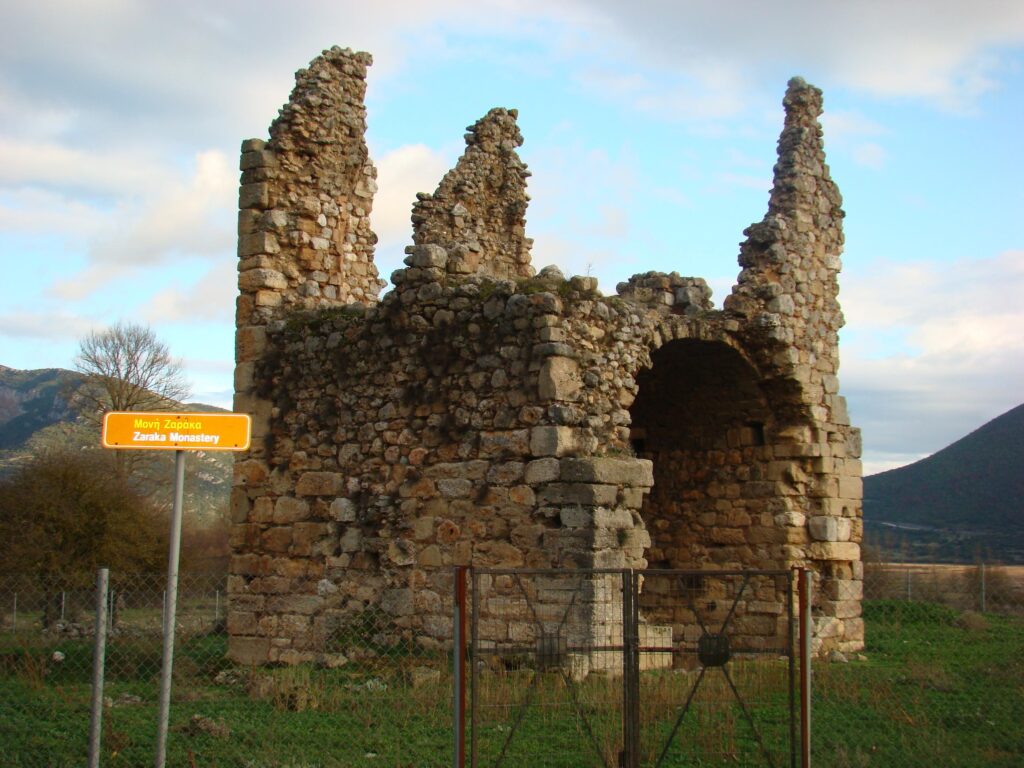
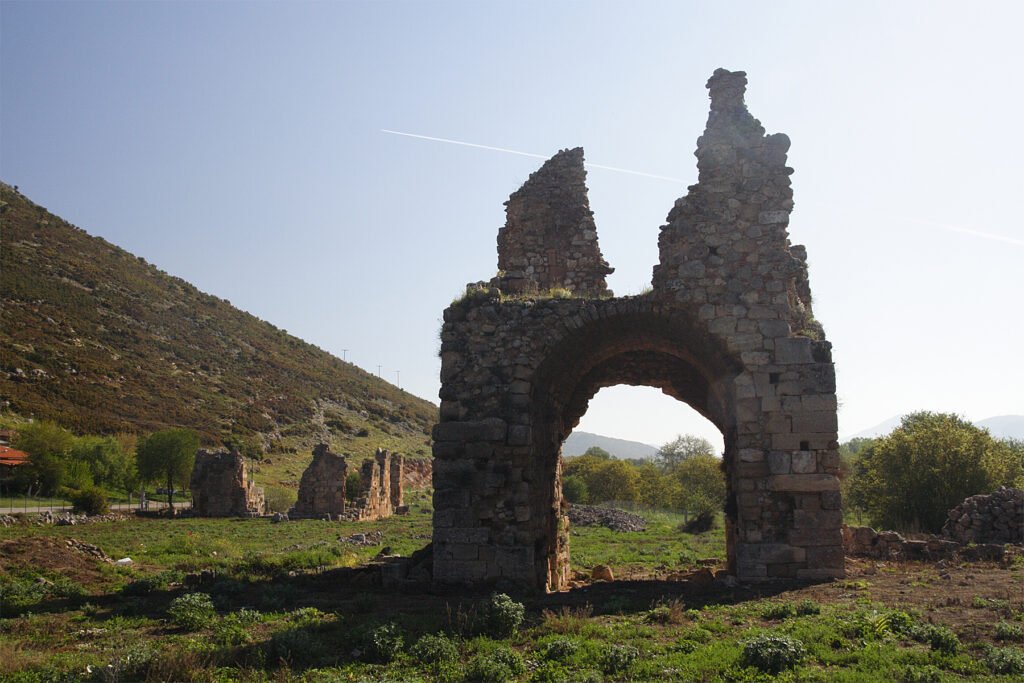
While most religious sites in Corinthia are of the Eastern Orthodox tradition, the ruins of the Monastery of Zaraka near Lake Stymphalia offer a rare glimpse into Western influence. This Cistercian monastery was built in the 13th century by Frankish monks. Its architecture is distinctly Gothic—a style rarely found in the Greek countryside—featuring pointed arches and stone masonry techniques typical of Western Europe at the time.
Walking through the archaeological site with the mythical Lake Stymphalia in the background provides a hauntingly beautiful experience. It connects the Byzantine history of the Peloponnese with the era of the Crusades, showing how different cultures left their mark on the Corinthian soil.
Monastery of Panagia Faneromeni (Chiliomodi)
Located in a dense pine forest approximately 3 kilometres from the village of Chiliomodi, the Monastery of Panagia Faneromeni is one of the oldest and most historic convents in the prefecture. The monastery is divided into the “Old” and “New” sections. The Old Monastery, whose katholikon dates back to the 13th century, preserves beautiful, though worn, frescoes.
Spirituality in the Woods
<
Planning your visit to Corinthia?
Visit Corinthia is the travel guide for the region — hotels, tavernas, wineries and things to do, all in one place.
Related articles
Scan to open the page with maps, photos and updates.
Printed on: 14/10/2026